
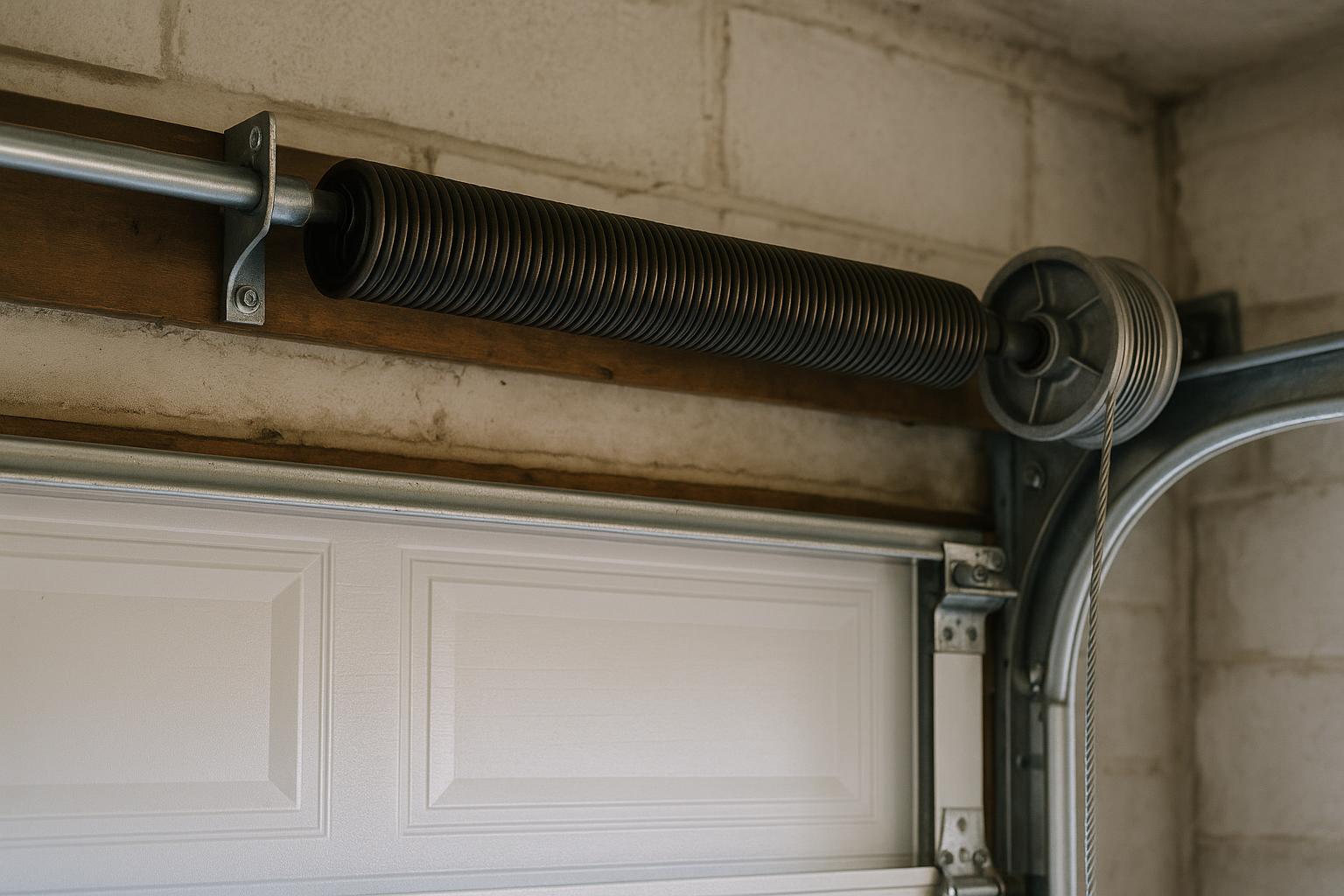
Your Garage Door Springs Are Working Harder Than You Think
Every time you open or close your garage door, the springs are doing the heavy lifting — literally. A standard two-car garage door can weigh between 150 and 250 pounds, and your springs are responsible for counterbalancing all of that weight. Over time, even the best springs wear out. For homeowners in North Lauderdale, where we use our garages year-round thanks to South Florida's warm climate, understanding when to replace your springs can save you from a dangerous failure or an unexpected lockout.
At North Lauderdale Garage Door Solutions, spring replacement is one of the most common calls we get. In this post, we'll walk you through how long garage door springs typically last, the warning signs that yours are wearing out, and why this is one repair you should never attempt on your own.
How Long Do Garage Door Springs Last?
Garage door springs are rated by cycles. One cycle equals one full open-and-close of your garage door. Here's what you can typically expect:
- Standard torsion springs: 10,000 cycles, which translates to roughly 7 to 10 years for the average household that opens and closes the door 3 to 5 times per day.
- High-cycle torsion springs: 25,000 to 50,000 cycles, lasting 15 to 20 years or more depending on usage.
- Extension springs: Generally 10,000 cycles, though they tend to wear less evenly than torsion springs and may need replacement sooner.
Keep in mind that these estimates assume normal usage. If your household has multiple drivers coming and going throughout the day, or if you use your garage as a primary entrance, your springs may wear out faster than expected.
Does Florida's Climate Affect Spring Lifespan?
It can. While North Lauderdale doesn't experience the freezing temperatures that cause metal fatigue in northern states, our high humidity and salt air — especially for homes closer to Pompano Beach or the coast — can contribute to corrosion over time. Rust weakens the coils and reduces the spring's effective lifespan. Regular lubrication and maintenance can help combat this, but it's something every South Florida homeowner should be aware of.
Warning Signs Your Garage Door Springs Need Replacement
Springs rarely fail without warning. Here are the most common signs that your garage door springs are nearing the end of their life:
1. The Door Feels Heavier Than Usual
If you disconnect your garage door opener and try to lift the door manually, it should feel relatively light — maybe 10 to 15 pounds of effort. If it feels significantly heavier, your springs have likely lost tension and aren't counterbalancing the door's weight properly.
2. The Door Opens Unevenly or Crooked
When one spring wears out faster than the other (especially common with extension spring systems), the door may tilt to one side as it opens or closes. This puts extra stress on your opener, tracks, and cables, and can lead to more expensive repairs down the road.
3. You Hear a Loud Bang From the Garage
A broken torsion spring releases its stored energy all at once, producing a loud bang that many homeowners mistake for something falling or even a break-in. If you heard a sudden loud noise and your garage door won't open, a broken spring is the most likely culprit.
4. There's a Visible Gap in the Spring
Take a look at the torsion spring mounted above your garage door. If you see a gap of a few inches in the coil, the spring has snapped and needs immediate replacement.
5. Your Opener Struggles or Stops Working
When springs lose tension, your garage door opener has to work much harder to lift the door. You might notice the motor straining, the door opening more slowly, or the opener stopping partway through the cycle. Continuing to use a struggling opener with bad springs can burn out the motor entirely.
6. The Door Slams Shut Quickly
Healthy springs control the speed at which your door closes. If the door drops faster than normal or slams to the ground, the springs are no longer providing adequate resistance. This is a serious safety hazard, especially in homes with children or pets.
Why You Should Never Replace Garage Door Springs Yourself
We understand the appeal of DIY projects — and there are plenty of garage door tasks that handy homeowners can handle, like lubricating hinges or tightening hardware. Spring replacement is not one of them.
Torsion springs are under extreme tension. A standard spring for a two-car garage door stores enough energy to cause severe injury or even death if it's released improperly. Every year, emergency rooms across the country treat serious injuries from DIY spring replacement attempts.
Professional technicians have the specialized tools, training, and experience to replace springs safely. At North Lauderdale Garage Door Solutions, our team handles spring replacements every day, and we always recommend replacing both springs at the same time — even if only one has broken. Since both springs were installed together, the second one is likely close behind, and replacing both saves you from paying for a second service call in a few months.
What to Expect During a Professional Spring Replacement
If you call us for a spring replacement in North Lauderdale or any of our service areas including Coconut Creek, Coral Springs, Margate, or Tamarac, here's what the process typically looks like:
- Inspection: We examine the entire door system — springs, cables, drums, rollers, and tracks — to identify all issues, not just the obvious one.
- Spring selection: We match the correct spring size and type to your specific door's weight and dimensions. Using the wrong spring is a common mistake that leads to premature failure.
- Safe removal: We carefully release the tension on the old springs and remove them.
- Installation and balancing: New springs are installed and precisely tensioned so the door opens and closes smoothly and stays in place when stopped at any height.
- Full system test: We test the door manually and with the opener, check the safety reversal system, and make sure everything is operating correctly.
The entire process usually takes about an hour, and we provide upfront pricing before we start any work — no surprises on your bill.
Extend the Life of Your Springs With Regular Maintenance
You can get the most out of your garage door springs by scheduling annual maintenance. A professional tune-up includes lubricating the springs and other moving parts, checking spring tension and door balance, inspecting cables and hardware for wear, and tightening any loose components.
For North Lauderdale homeowners, we recommend scheduling maintenance in the fall or early winter, before the holiday season when your garage door sees extra use from guests and deliveries. A small investment in maintenance can add years to your springs' lifespan and help you avoid the inconvenience of an unexpected breakdown.
Don't Wait for a Broken Spring to Take Action
If you've noticed any of the warning signs we've discussed — a heavy door, unusual noises, uneven movement, or a struggling opener — don't wait for a complete spring failure. A broken spring means your car could be trapped in the garage at the worst possible time, and a door operating on a broken spring is a genuine safety risk.
North Lauderdale Garage Door Solutions offers fast, honest spring replacement services throughout North Lauderdale and the surrounding communities. We show up on time, explain what needs to be done, and get your door working safely again — often the same day you call. Reach out to us today to schedule an inspection or ask any questions about your garage door springs.