
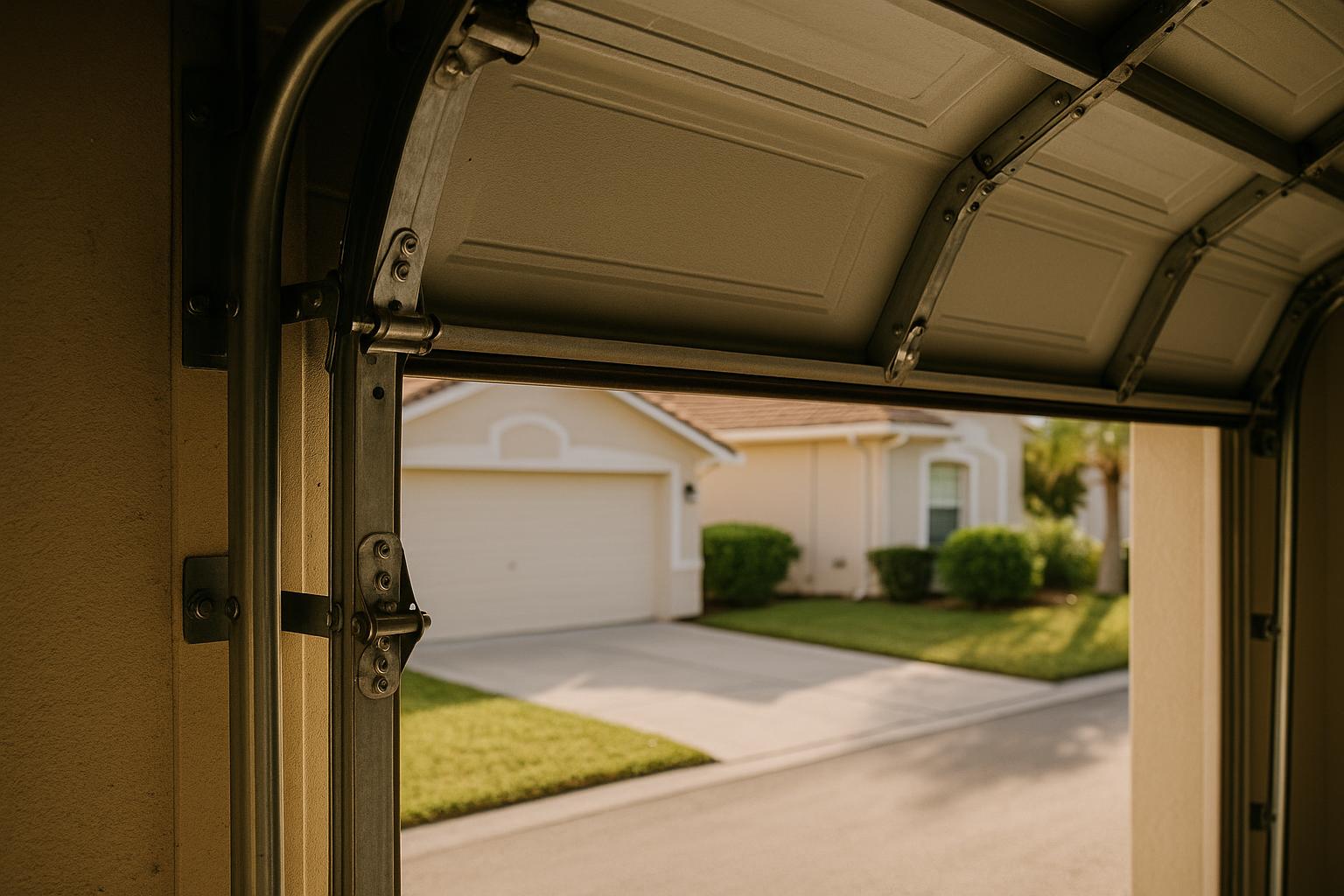
Why Is Your Garage Door So Loud?
You press the button, and instead of a smooth, quiet operation, your garage door sounds like a freight train rolling through your home. If you're a homeowner in North Lauderdale dealing with a noisy garage door, you're not alone. It's one of the most common complaints we hear, and the good news is that most causes are identifiable and fixable.
A loud garage door isn't just annoying — it can be an early warning sign that something needs attention before it turns into a costly repair. In this guide, we'll walk you through the most common reasons your garage door is making noise and what you should do about each one.
1. Worn or Dry Rollers
Garage door rollers are small wheels that guide your door along the vertical and horizontal tracks. Over time, these rollers wear down, develop flat spots, or lose their lubrication. When that happens, you'll hear grinding, squeaking, or rattling every time the door moves.
Metal rollers are especially prone to noise as they age. If your home still has the original steel rollers that came with the door, they may be long overdue for replacement.
The Fix
Upgrading to nylon rollers is one of the best investments you can make for a quieter garage door. Nylon rollers are significantly quieter than metal ones, require less maintenance, and typically last longer. If your rollers are in decent shape but just dry, a proper application of garage door lubricant can make a noticeable difference.
2. Loose Hardware
Your garage door opens and closes hundreds — sometimes thousands — of times per year. All that vibration gradually loosens nuts, bolts, and brackets throughout the system. Loose hardware is one of the most common causes of rattling and vibrating noises.
The Fix
Grab a socket wrench and carefully tighten all the bolts on the door's hinges, brackets, and track mounts. Be careful not to overtighten, as that can strip the holes or warp the track. If you notice any bolts that won't stay tight or brackets that appear cracked, it's time to call a professional for a closer inspection.
3. Unbalanced Garage Door
An unbalanced door puts extra strain on the opener and other components, often producing a loud straining or banging sound. You might also notice the door seems heavier on one side or doesn't stay in place when you manually lift it halfway and let go.
The Fix
Testing your door's balance is simple. Disconnect the opener by pulling the emergency release handle, then manually lift the door about halfway. If it stays in place, the balance is fine. If it slides up or crashes down, the springs need adjustment. Spring adjustment is dangerous and should always be handled by a trained technician. Homeowners in North Lauderdale and surrounding areas like Coconut Creek and Margate can reach out to us for a professional balance assessment.
4. Worn or Damaged Springs
Torsion and extension springs bear the full weight of your garage door, and when they start to wear out, they can produce loud creaking, popping, or snapping sounds. A sudden loud bang from your garage — especially when no one is operating the door — often means a spring has broken.
The Fix
Spring repair and replacement is not a DIY job. These components are under extreme tension and can cause serious injury if handled incorrectly. If you suspect your springs are the source of the noise, stop using the door and contact a garage door professional immediately.
5. Lack of Lubrication
This is probably the simplest and most overlooked cause of a noisy garage door. Moving metal parts need lubrication to operate smoothly. Without it, you'll hear squealing, grinding, and scraping sounds that get worse over time.
What to Lubricate
- Hinges — Apply lubricant to the pivot points where the hinges bend
- Rollers — Lubricate the bearings (but avoid the track itself)
- Springs — A light coat along the coils helps reduce friction noise
- Bearing plates and pulleys — These often get overlooked but benefit from regular lubrication
Use a silicone-based or lithium-based garage door lubricant. Avoid WD-40 for this purpose — it's a solvent and degreaser, not a long-term lubricant. Proper lubrication every six months can dramatically reduce noise and extend the life of your door's components.
6. Bent or Misaligned Tracks
The metal tracks on either side of your garage door need to be properly aligned for the door to travel smoothly. If a track gets bumped, bent, or shifts out of alignment, the door will scrape, grind, or produce a rhythmic banging as it moves through the damaged section.
The Fix
Visually inspect both tracks for obvious bends, gaps, or areas where the track has pulled away from the wall. Minor misalignments can sometimes be corrected by loosening the mounting brackets, gently tapping the track back into position, and retightening. However, significantly bent tracks usually need to be replaced. Forcing a door to operate on damaged tracks can lead to the door coming off the track entirely, which is both dangerous and expensive to repair.
7. An Aging or Failing Garage Door Opener
If the noise seems to be coming from the ceiling-mounted unit rather than the door itself, your opener may be the culprit. Older chain-drive openers are notoriously loud even when functioning properly. But if your opener has started making new or louder sounds — grinding, humming, or clicking — it could be wearing out internally.
The Fix
For homeowners in the Pompano Beach, Coral Springs, and Tamarac areas who are tired of a loud chain-drive opener, upgrading to a belt-drive opener is a game-changer. Belt-drive systems use a reinforced rubber belt instead of a metal chain, resulting in near-silent operation. If your opener is more than 15 years old and making unusual sounds, replacement is often more cost-effective than repair.
When to Call a Professional
Some garage door noise issues are easy to address on your own — tightening hardware and applying lubricant are simple maintenance tasks any homeowner can handle. But other problems require professional tools, training, and experience to fix safely.
Call a professional if:
- You suspect a broken or worn spring
- The door is visibly off-track or crooked
- The opener is making internal grinding or burning smells
- You've lubricated and tightened everything but the noise persists
- The door feels significantly heavier than usual
Keep Your Garage Door Quiet with Regular Maintenance
Most noisy garage door problems are preventable with routine maintenance. A professional tune-up once or twice a year keeps all the moving parts lubricated, properly adjusted, and in good working order. It also gives a technician the chance to catch small issues before they become big, expensive problems.
At North Lauderdale Garage Door Solutions, we provide thorough maintenance and tune-up services designed to keep your door running quietly and reliably for years. Whether you're dealing with a mysterious new noise or you just want to stay ahead of potential issues, we're here to help. We serve homeowners throughout North Lauderdale and the surrounding South Florida communities with honest pricing and dependable service — every time.