
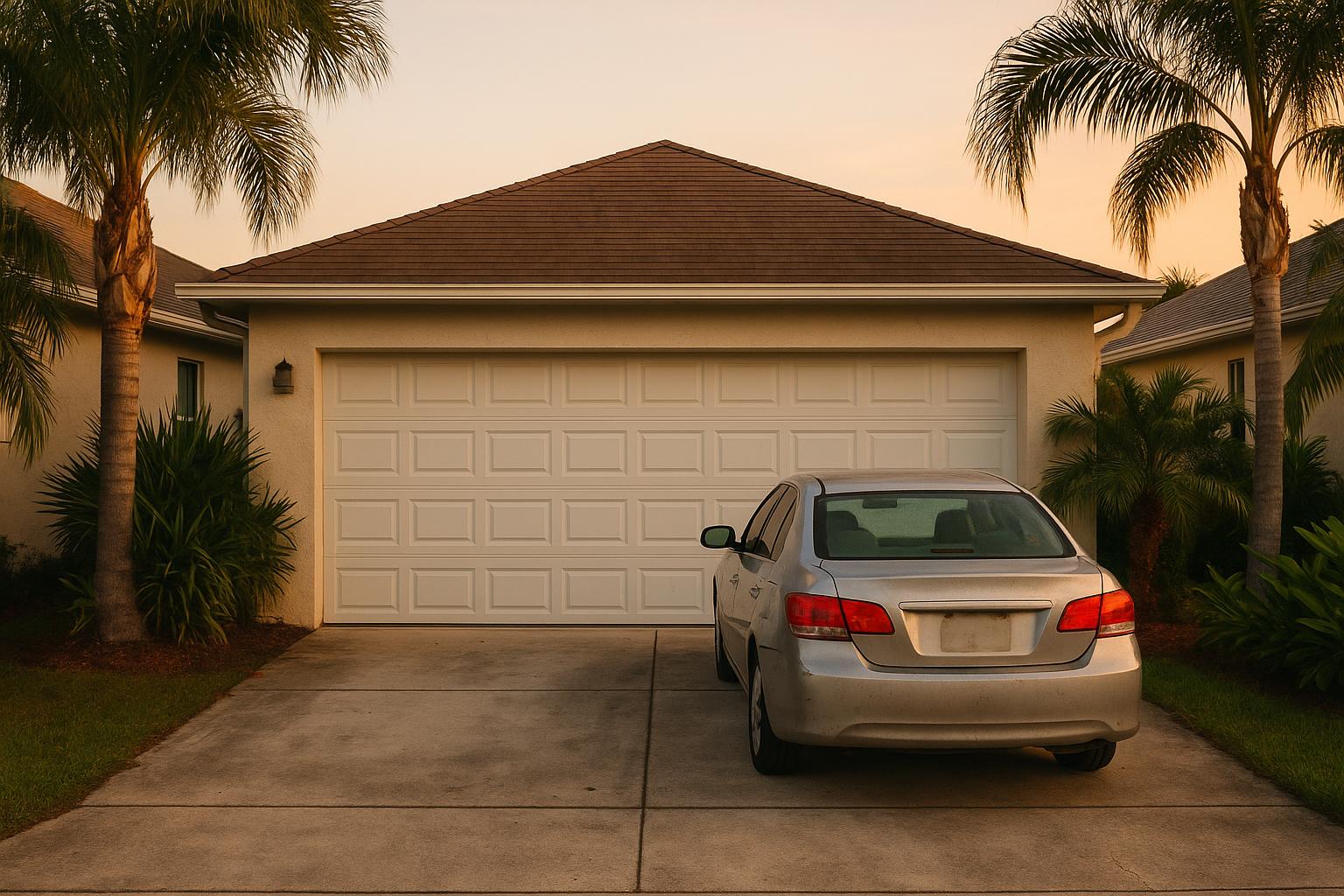
You're Running Late — and Your Garage Door Won't Budge
It's a scenario that plays out in driveways across North Lauderdale more often than you'd think. You press the button on your garage door opener, hear a click or a hum, and… nothing. The door stays put. Maybe it lifts an inch and drops back down. Maybe it doesn't respond at all. Either way, you're stuck — and you're already running behind.
Before you panic or start searching for a way to manually force the door open, take a breath. Most of the time, a garage door that won't open in the morning has a straightforward explanation. Let's walk through the most common causes and what you can do about each one.
1. Dead Batteries in Your Remote or Wall Button
It sounds almost too simple, but this is the number one reason people think their garage door is broken when it's actually fine. Remote control batteries die gradually, and you may not notice the weakening signal until one morning it just stops working altogether.
What to do: Replace the batteries in your remote with fresh ones. If you have a wall-mounted button inside the garage, try pressing that instead. If the wall button works but the remote doesn't, you've found your culprit. Keep spare batteries on hand — it's one of the easiest fixes in the book.
2. The Garage Door Is Off Its Tracks
If your garage door looks crooked, has a visible gap on one side, or makes a grinding sound when you try to operate it, the door may have come off one or both of its tracks. This can happen due to an impact, worn rollers, or loose hardware that has shifted over time.
What to do: Do not try to force the door open. Operating a door that's off-track can cause serious damage to the door panels, the tracks, and the opener — and it's a safety hazard. This is a situation where you should call a professional for garage door repair. A trained technician can realign the door safely and inspect for any underlying damage.
3. Broken Torsion or Extension Springs
Your garage door springs do the heavy lifting — literally. They counterbalance the weight of the door so your opener doesn't have to muscle it up on its own. When a spring breaks, the opener usually can't generate enough force to lift the door, or it may only raise it a few inches before stopping.
You might hear a loud bang from the garage the night before or early in the morning. That sound is often a spring snapping under tension.
What to do: Spring replacement is not a DIY job. These components are under extreme tension and can cause serious injury if handled improperly. If you suspect a broken spring, leave the door closed and call a garage door service company to handle the replacement safely.
4. The Safety Sensors Are Blocked or Misaligned
Modern garage doors are equipped with photoelectric safety sensors near the bottom of the door tracks. These sensors send an invisible beam across the opening, and if anything breaks that beam — a trash can, a leaf, a cobweb, even direct morning sunlight — the door may refuse to close or open properly.
What to do: Check both sensors on either side of the door. Make sure nothing is blocking them and that their indicator lights are steady (not blinking). Gently wipe the sensor lenses with a clean cloth. If one sensor has been bumped out of alignment, carefully adjust it until the lights stabilize. In South Florida, humidity and insects can also interfere with sensors, so regular cleaning is a good habit.
5. The Opener Has Lost Power
Power outages are common in North Lauderdale, especially during storm season. If your garage door opener doesn't have power, it won't respond to any commands. Sometimes the issue isn't a neighborhood-wide outage — it could be a tripped breaker or a loose plug.
What to do: Check that the opener unit is plugged in securely. Then check your electrical panel for a tripped circuit breaker. If the breaker keeps tripping, there may be an electrical issue that needs professional attention. In the meantime, most garage doors have an emergency release cord (usually a red handle hanging from the opener rail) that lets you operate the door manually.
6. The Lock Mode Is Engaged
Many garage door openers have a lock feature that disables the remote controls. This is designed to prevent the door from being opened while you're away on vacation. It's easy to activate accidentally, especially if a child presses the lock button on the wall console.
What to do: Look at your wall-mounted control panel. If there's a lock icon illuminated or a button labeled "Lock," press and hold it to disengage the lock mode. Once deactivated, your remote should work normally again.
7. Worn or Damaged Cables
Lift cables work in tandem with your springs to raise and lower the door smoothly. Over time, cables can fray, rust, or snap — especially in the humid climate we deal with here in South Florida. A broken cable can cause the door to hang unevenly or refuse to open at all.
What to do: Like springs, cables are under significant tension and should only be replaced by a qualified technician. If you see frayed or dangling cables, avoid using the door and schedule a repair as soon as possible.
When to Call a Professional
Some of these issues — dead batteries, sensor cleaning, checking the power supply — are quick fixes you can handle yourself. But anything involving springs, cables, tracks, or the opener motor is best left to experienced professionals. Attempting these repairs without the right tools and training can lead to further damage or personal injury.
If you're in North Lauderdale, Coconut Creek, Pompano Beach, Margate, Coral Springs, or Tamarac and your garage door won't cooperate, North Lauderdale Garage Door Solutions can help. We offer same-day and emergency service so you're not stranded in your driveway any longer than necessary.
Prevent Morning Surprises with Regular Maintenance
The best way to avoid waking up to a garage door that won't open is to stay ahead of problems with routine maintenance. A professional tune-up once or twice a year can catch worn springs, fraying cables, misaligned sensors, and other issues before they leave you stuck.
During a maintenance visit, a technician will lubricate moving parts, tighten hardware, test the balance of the door, inspect the opener, and make sure all safety features are functioning correctly. It's a small investment that saves you from unexpected breakdowns and costly emergency repairs.
Your garage door is one of the largest moving parts of your home — and probably the one you rely on most every single morning. Give it the attention it deserves, and it'll keep working reliably when you need it most.