
That Frustrating Moment When Your Garage Door Won't Stay Closed
You press the button on your remote, the garage door starts its descent, and then — just before it reaches the floor — it reverses and goes right back up. You try again. Same thing. Maybe it gets a little closer to the ground this time, or maybe it reverses even sooner. Either way, your garage is sitting wide open, and you're wondering what went wrong.
This is one of the most common garage door complaints we hear from homeowners in North Lauderdale, and the good news is that it's almost always fixable. The key is understanding why it's happening so you can determine whether it's a quick DIY adjustment or something that requires professional attention.
Understanding Your Garage Door's Safety System
Before we dive into the causes, it helps to understand that your garage door is designed to reverse. Modern garage door openers manufactured after 1993 are required by federal law to include two safety mechanisms:
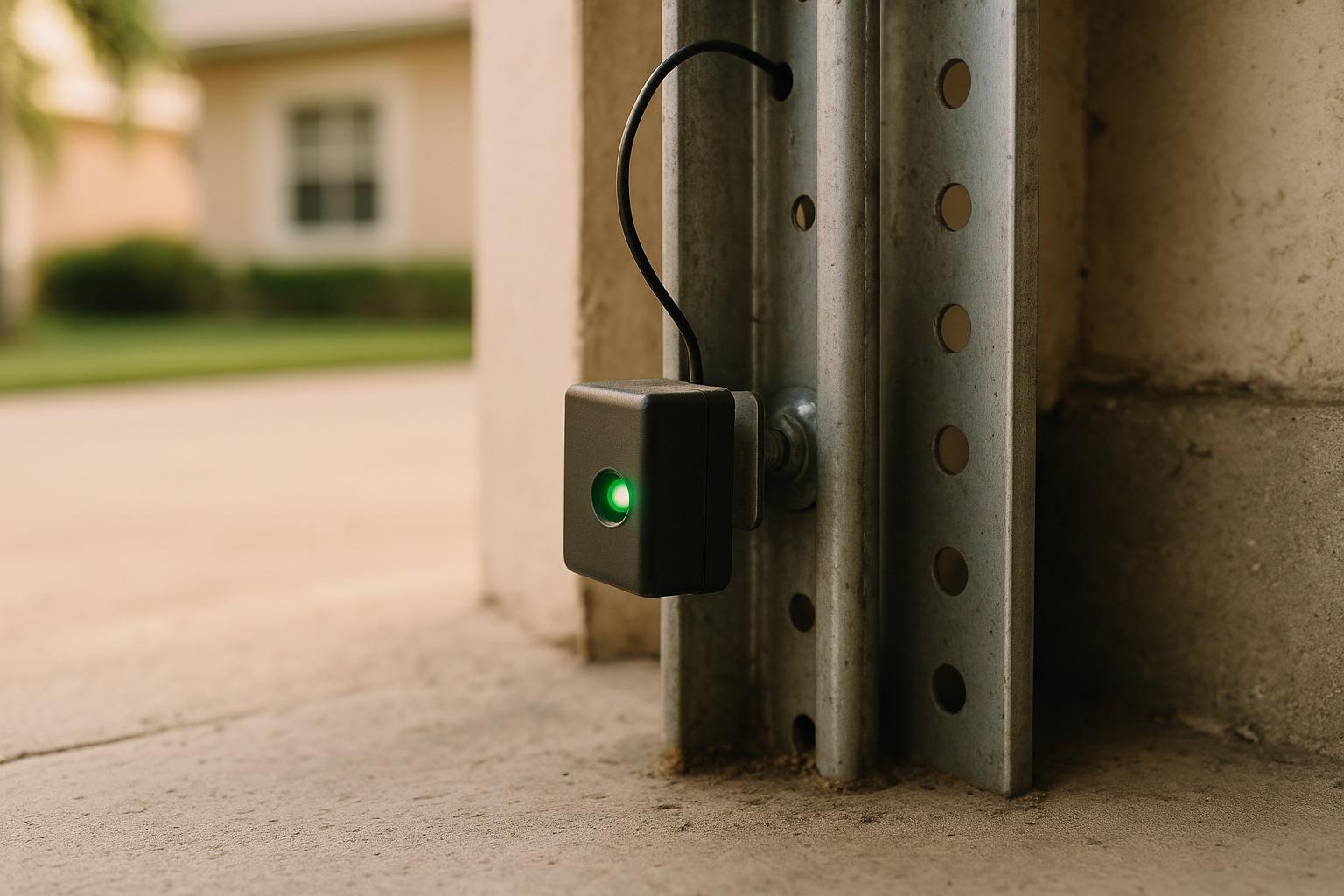
- Photo-eye sensors: Two small sensors mounted near the bottom of the door tracks on either side. They project an invisible beam across the opening. If anything breaks that beam while the door is closing, it reverses.
- Auto-reverse mechanism: If the door encounters physical resistance while closing — like hitting an object or the ground too hard — it automatically reverses direction.
Both of these features exist to prevent injuries and property damage. But when they malfunction or fall out of adjustment, they can cause the door to reverse even when nothing is actually in the way.
The Most Common Causes of a Reversing Garage Door
1. Misaligned or Dirty Photo-Eye Sensors
This is the number one culprit. The photo-eye sensors on either side of your garage door opening need to be perfectly aligned with each other to maintain the infrared beam. Over time, they can get bumped, shifted by vibration, or simply accumulate dirt, spider webs, and debris — something that happens frequently in South Florida's humid climate.
What to check: Look at the small LED lights on each sensor. Most models show a steady green light when aligned and a blinking light when misaligned. Try gently wiping each sensor lens with a soft cloth and see if that solves the problem. If the lights are still blinking, you may need to carefully adjust the sensor brackets until both lights are steady.
2. Incorrect Close-Limit Settings
Your garage door opener has close-limit settings that tell it how far the door should travel before it's considered fully closed. If these settings are off, the opener may think the door has hit an obstruction when it's actually just reaching the floor. The motor interprets the resistance as a safety issue and reverses the door.
What to check: On most openers, the limit adjustment is a small screw or dial on the back or side of the motor unit. Consult your owner's manual for specific instructions. Small adjustments can make a big difference, so turn the screw in small increments and test after each adjustment.
3. Worn or Broken Springs
Your garage door springs do the heavy lifting — literally. They counterbalance the weight of the door so the opener motor doesn't have to work as hard. When springs wear out, lose tension, or break, the door becomes significantly heavier. The opener motor strains against the extra weight, interprets it as an obstruction, and reverses.
What to check: With the door closed, pull the emergency release handle to disconnect the opener. Try lifting the door manually. A properly balanced door should lift relatively easily and stay in place when you let go about halfway up. If it's extremely heavy or slams back down, your springs likely need replacement. Spring replacement is dangerous and should always be handled by a trained technician.
4. Damaged or Obstructed Tracks
The metal tracks that guide your garage door up and down need to be clean, properly aligned, and free of dents or bends. Even a small obstruction or a slight bend in the track can create enough resistance to trigger the auto-reverse feature.
What to check: Visually inspect both tracks from top to bottom. Look for debris, buildup, dents, or sections where the track appears bent or misaligned. You can clean the tracks with a damp cloth, but bent or damaged tracks typically require professional repair.
5. Worn Rollers or Hinges
The rollers that ride inside the tracks can wear out over time, especially the standard steel rollers that come with many garage doors. Worn rollers create friction and resistance, which can cause the same reversal issue. Rusty or stiff hinges compound the problem.
What to check: Look at the rollers for signs of wear — flat spots, cracks, or wobbling. If your rollers are original and your door is more than seven or eight years old, they may simply be due for replacement. Nylon rollers are a great upgrade that also reduce noise.
6. Wiring Issues with the Opener
Sometimes the problem isn't mechanical at all. Frayed, loose, or damaged wiring between the opener and the sensors can send intermittent or incorrect signals, causing unpredictable reversals. Rodents, moisture, and general wear can all damage wiring over time.
What to check: Inspect the wires running from the opener unit down to each sensor. Look for any obvious damage, loose connections at the terminals, or signs of chewing. If you find damaged wiring, it's best to have a professional handle the repair to ensure it's done safely.
When to Call a Professional
Some of these issues — like cleaning sensors or checking for track obstructions — are safe for most homeowners to handle. But others require specialized knowledge and tools. Here's a good rule of thumb for when to call in a garage door technician:
- The door is extremely heavy when operated manually (likely a spring issue)
- You see visible damage to springs, cables, or brackets
- Track damage requires bending or realignment
- Limit adjustments don't resolve the problem after several attempts
- You notice frayed cables or broken hardware
- The problem started after a storm or impact
Here in North Lauderdale, storms and humidity take a toll on garage door components faster than in drier climates. Regular maintenance can catch many of these issues before they turn into a door that won't close at all — which is the last thing you want during hurricane season.
Preventing Future Reversing Issues
The best way to avoid dealing with a garage door that won't stay closed is routine maintenance. A yearly tune-up that includes lubricating moving parts, inspecting springs and cables, testing the balance, cleaning sensors, and checking the opener settings can extend the life of your entire system and keep everything running smoothly.
If your garage door keeps reversing and you've tried the basic troubleshooting steps without success, don't keep forcing it. Repeatedly running the opener against a problem can burn out the motor or cause additional damage. North Lauderdale Garage Door Solutions offers same-day diagnostic visits so we can pinpoint the issue, explain your options, and get your door working properly — with honest pricing and no surprises.
A garage door that won't close isn't just an inconvenience. It's a security risk for your home and everything inside your garage. If you're dealing with this problem, reach out to us and we'll get it sorted out quickly.